lowerback.me
I had lower back pain for six years.
Today I don't.
Not a clinic, not a cure, and not a miracle. Just the honest account of what six years of back pain was actually like, what I got wrong for most of it, and the approach that finally moved things for me.
If your back has been hurting long enough that you have stopped expecting it to stop, you are the person I wrote this for.
The seven chapters, and what each one covers
Written from personal experience. Not a doctor, physiotherapist, or medical professional.
I thought it would go away
At the start I did what I think most people do. I assumed it was temporary. Something I had done wrong, something that would settle down on its own in a week or two if I was careful with it.
So I waited.
And to be fair, it did get better. That is the part nobody warns you about. It got better, I got on with things, and then it came back.
Then it got better again. Then it came back again. That cycle is what quietly turns a few bad weeks into a few bad years.
Every time it eased off, I took it as proof that it was fine. Every time it returned, I told myself this one was just bad luck. I never stood back far enough to notice I had been having the same conversation with myself for a very long time.
It went on for
Six years
Long enough that I stopped describing it as an injury and started describing it as my back. As in, that is just how my back is.
It was never really about the pain
If you have only had back pain for a week, you think the problem is how much it hurts. When you have had it for years, you find out the pain is almost the smaller part.
The bigger part is how much room it takes up in your head.
You start thinking before you do ordinary things. How long is that drive. Will I be able to sit through that. What is that chair like. How am I going to feel tomorrow morning if I do this today.
None of that is dramatic. None of it is worth mentioning to anyone. You just get quietly worse at making plans, and you get very good at working out where you can sit down.
And you get tired of being asked how the back is.
At some point I stopped thinking of it as a problem to solve, and started thinking it was permanent.
That is a strange thing to admit, because it did not feel like giving up. It felt reasonable. Six years of evidence pointing the same direction.
I was not depressed about it. I had just adjusted. I had built a life that worked around my back, and I had stopped seriously expecting that to change.
What actually changed
I want to be careful here, because this is exactly the point where most pages like this one start lying to you.
There was no single thing. No stretch I had never heard of, no piece of equipment, no video that fixed it in thirty seconds. If that is what you are looking for I would honestly rather you closed this page, because whatever you buy next that promises it is not going to work either.
What changed was smaller and much more boring than that.
I stopped reacting to my back and started paying attention to it.
For years my entire approach had been reactive. Bad day, do something about it. Good day, forget about it entirely and go back to normal. Which meant I was doing something different every week, never long enough to know whether any of it worked, and I had no idea which of my ordinary daily habits were feeding the whole thing.
So I started actually writing things down. What I did, how I slept, how the next morning felt. Nothing scientific. Just enough to spot a pattern instead of guessing at one.
The patterns were not what I expected. Some things I had been avoiding for years turned out to be fine. Some things I thought were harmless were reliably followed by a bad two days.
Then, and this is the part that actually mattered, I picked one approach and stayed with it long enough to find out if it worked.
Months, not days. That is the whole thing. It is not a secret and it is not impressive, and it is the reason I spent six years going in circles before it.
The approach, in plain terms
Four ideas. None of them clever. Together they are what the program is built on.
- 01
Find your pattern before changing anything
You cannot fix what you have not noticed. A couple of weeks of paying proper attention tells you more about your own back than any general advice can.
- 02
Keep moving, carefully
My instinct for years was to protect my back by using it less. Doing the opposite, gradually, is also what health services recommend for ordinary back pain. Source
- 03
Small enough that you will actually do it
An ambitious plan you abandon in nine days is worth less than a modest one you keep for six months. I made mine almost embarrassingly small at the start.
- 04
Expect setbacks, and plan for them
A bad week is not the program failing. It is the normal shape of this. Knowing that in advance is what stopped me quitting every time it happened.
One honest caveat. Back pain is not one condition, and about nine in ten cases have no single identifiable structural cause. Source That is the kind this is written around. It is not written around a specific diagnosis, and it cannot tell you which kind you have.
Today
I don't plan my day around my back anymore.
That is the honest version of the ending, and it is smaller than "cured". I am not going to tell you I never feel anything, because that is not true and you would be right not to believe me.
What is true is that it stopped being the thing I think about. I sit through what I need to sit through. I do not audit the chairs in a room. Mornings are just mornings.
After six years, that turned out to be the thing I actually wanted. Not a dramatic recovery. Just my ordinary life back, without the running commentary.
I wrote all of this down for myself first, when I was trying to keep track of what worked. It ended up being genuinely useful, and it seemed worth organising properly for anyone else stuck in the same loop.
The Lower Back Program
It is a PDF. I am saying that plainly because I would rather you know exactly what you are getting than be impressed and then disappointed.
What it actually is: the whole approach written out in order, week by week, so you are not assembling something from scratch out of search results and contradictory videos. A way to track your own patterns. What to do first, what to add later, and what I do when a flare-up happens.
It is the thing I wish someone had handed me in year one.

What's inside
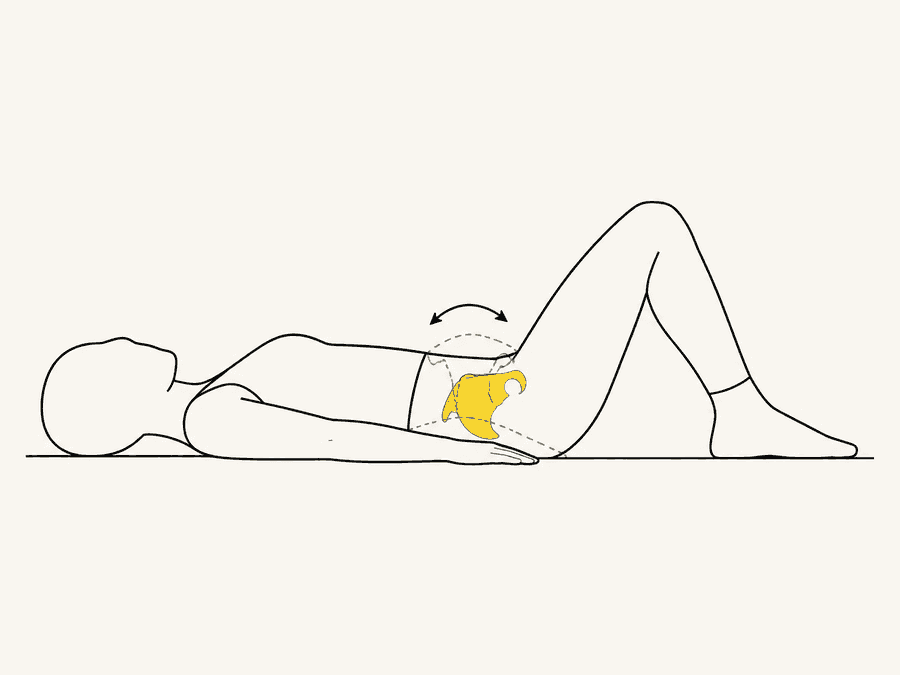
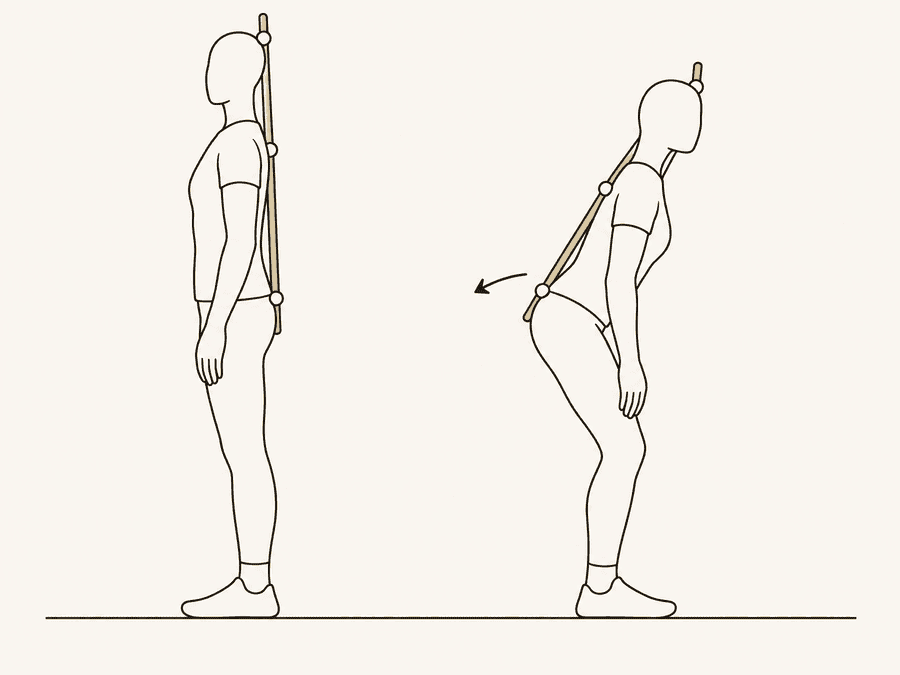
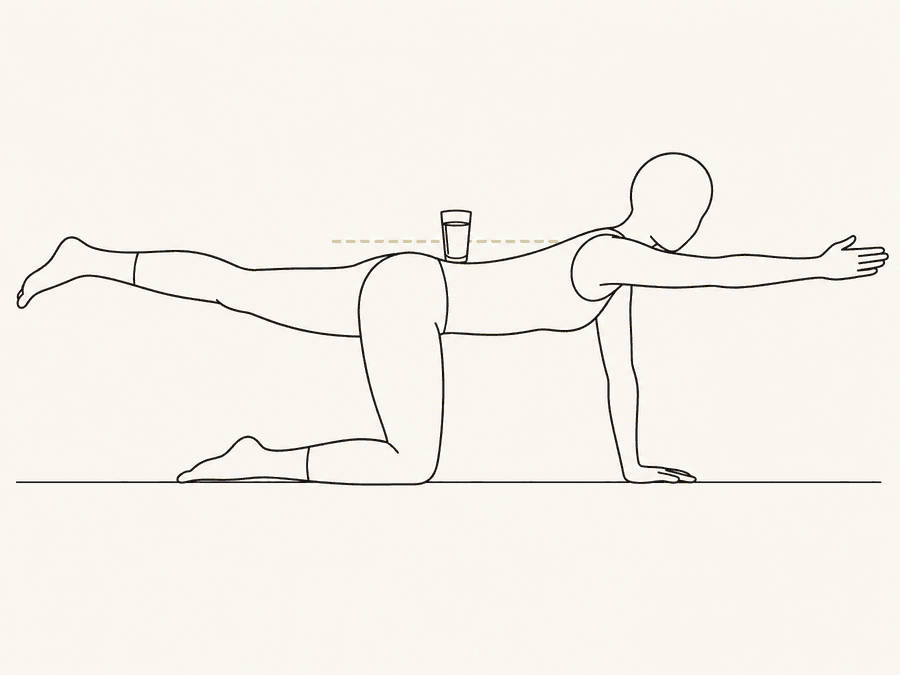
The illustrations beside some chapters are real pages from the PDF. There are 44 of them, one for every exercise and one for its held version.
- 01
Working out what your pattern actually is
Most people know their back hurts. Fewer know when, after what, and for how long. This is how I started tracking mine, and what it showed me.
- 02
The first two weeks
What to do at the start, when motivation is high and it is tempting to do far too much. Deliberately small, so it is hard to fail.
- 03
Movement, and the fear of it
The part I got most wrong for the longest time. Why I stopped avoiding movement, and how I built back up without setting myself off.
- 04
Sitting, sleeping, and everything in between
The ordinary parts of a day that quietly matter more than any single exercise session.

- 05
Progressing without overdoing it
How to add difficulty at a rate your back tolerates, and the signs I use to tell the difference between working hard and pushing too far.
- 06
Flare-ups and what I do now
They still happen. This is the plan I follow when they do, instead of panicking and undoing weeks of work.
- 07
Keeping it going when nothing hurts
The hardest chapter to follow, because feeling fine is exactly when people stop. What made it stick for me.
$39 once. Instant PDF download.
Who this is for, and who it isn't
The second list matters more than the first one, so please read it.
This is probably for you if
- Your lower back has been bothering you for months or years
- It settles down, then comes back, and you have stopped counting
- You have been checked over and told nothing serious is going on
- You have tried plenty of individual things but never one thing consistently
- You want a plan to follow rather than more information to sort through
This is not for you if
- Your pain is new, severe, or getting worse quickly
- You have any of the warning signs listed below
- You are pregnant, since that needs guidance built for it
- You have a specific diagnosis and have not spoken to whoever is treating you
- You want a guaranteed timeframe, because I cannot honestly give you one
Why I made this
I am not a doctor, a physiotherapist, or any kind of medical professional, and I am not going to pretend otherwise anywhere on this site. I am someone who had lower back pain for six years and eventually found a way through it.
That cuts both ways, and you should weigh it accordingly. I know what six years of this feels like in a way a clinic page never will. I also cannot examine you, diagnose you, or tell you what is going on with your particular back.
So the program does not try to. It gives you a structure that worked for me and enough detail to apply it to your own situation, and it is honest about where its limits are. Where I mention anything medical, I link to the actual source so you can check it rather than take my word for it.
Get the program
One PDF, one payment, nothing after that.
The complete program
The Lower Back Program
- The full program as a PDF, yours to keep
- A week by week structure to follow, not a pile of loose exercises
- A simple way to track what sets your back off
- 44 illustrations, one for every exercise and one for its held version
- What I do when a flare-up happens
- Readable on a phone, tablet or computer
- Free updates when I revise it
Instant PDF download. 14 day right to cancel before you download it.
Applicable tax is calculated at checkout. Secure payment handled by Paddle.
Questions people ask
Is this medical advice?
No. I am not a doctor or a physiotherapist. This is an account of what I worked out during six years of dealing with my own back pain, organised so someone else can follow it. It is educational material, not a diagnosis and not a treatment plan for your specific situation. If your pain is new, severe, getting worse, or comes with any of the warning signs listed on this page, see a doctor rather than reading a PDF.
Will this help with a herniated or bulging disc?
I cannot tell you that, and I would be suspicious of anyone selling you something who says they can. A disc problem is a specific diagnosis that needs a professional who has actually examined you. The program was written around ordinary long-running back pain, which is the most common kind. If you have a diagnosed disc problem, talk to whoever is treating you before starting anything new, including this.
Is it suitable for back pain during pregnancy?
No. Back pain in pregnancy is common but it needs guidance built for it, and this program was not. Please speak to your midwife, doctor or a physiotherapist who works with pregnancy instead.
When should I see a doctor instead of trying this?
Straight away if you have numbness or weakness in both legs, any loss of feeling around your genitals or backside, trouble controlling your bladder or bowels, back pain after a serious fall or accident, severe pain that came on suddenly or is getting worse quickly, back pain with a fever, or unexplained weight loss. Those need urgent medical attention, not a program. Please also see someone if the pain is stopping you doing everyday things, or if it simply is not improving and you are worried.
How do I get the program after paying?
It is a PDF and it is delivered immediately. You get a download link on the confirmation page as soon as the payment goes through, and the same link is emailed to you so you do not lose it.
Can I read it on my phone?
Yes. It is a PDF, so it opens on a phone, a tablet, a laptop or an e-reader without any app. You can also print it if you would rather work from paper.
Do I need a gym, or any equipment?
No. Everything in it can be done at home with no equipment. That was deliberate. The moment something needs a gym membership or a specific machine, it becomes one more reason to not do it.
How long does it take?
The program is structured week by week, and the daily commitment is small on purpose. I would rather you do fifteen minutes consistently than an hour twice and then stop. How long it takes before you notice anything is not something I can promise, because that varies between people and I have no way of knowing your situation.
How quickly will my back pain go away?
I genuinely do not know, and I am not going to invent a number to make the sale easier. What I can tell you is what happened to me: it was gradual, it took months rather than days, and there were setbacks along the way. Anyone promising you a fixed timeframe for your back is guessing.
Is this a subscription?
No. You pay once and the PDF is yours. There is no recurring charge, no trial that turns into a subscription, and nothing else to buy afterwards.
What if it is not for me?
Before you download it you have a 14 day right to cancel, no reason needed. After you download it that right ends, because a PDF cannot be given back. At that point, email me and tell me what went wrong. I read them myself and I would rather refund you than leave you stuck with something that did not help. You can keep the PDF either way. The refund policy page has the details.
Who wrote this?
One person, writing from experience rather than from a clinic. I had lower back pain for six years and eventually worked out an approach that helped me. I wrote it down for myself first. The about page explains the position I am writing from and, just as importantly, what I am not qualified to tell you.
Six years is a long time to spend wondering whether your back is ever going to feel normal again.
I am not going to tell you this will work for you. I do not know you, I have not examined you, and anyone who talks that way about your back is guessing.
What I can tell you is that I spent six years without a plan, and a few months with one, and the difference between those two things was not the pain. It was knowing what I was doing and why.
If you have been going in circles with this for long enough, having something to actually follow is not a small thing.
$39 once. Instant PDF download.